
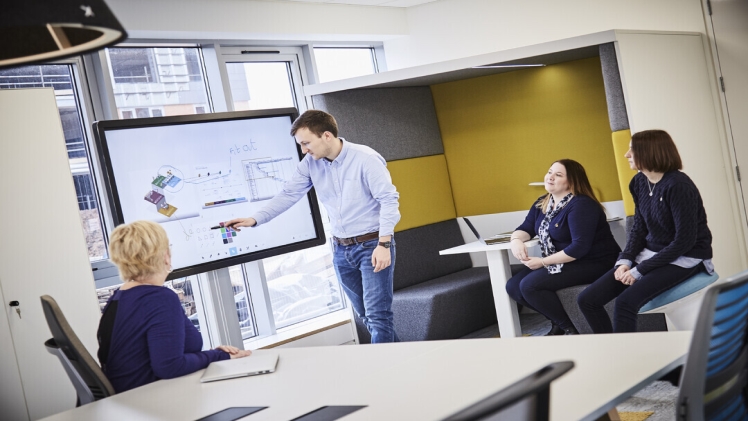
In today’s fast-paced and increasingly digital world, the workplace is transforming toward fostering environments that prioritize collaboration and innovation. Integrating interactive technology into workspaces is at the heart of this evolution, fundamentally changing how teams interact, share ideas, and achieve collective goals. This shift is about adopting new tools and reimagining the traditional workspace to support a more dynamic and participatory form of collaboration. Central to this transformation is the innovative approach to conference room design, where incorporating interactive technologies like smart boards, digital displays, and collaborative software has become essential. These technologies provide a platform for ideas to converge and flourish, enabling teams to engage more meaningfully and productively. The result is a workspace that not only adapts to the modern demands of collaboration but also enhances teams’ overall efficiency and creativity.
The Evolution of Interactive Technologies in Workspaces
The journey of interactive technologies from simple audio-visual equipment to sophisticated collaborative platforms marks a significant leap in workplace evolution. This transition reflects a broader shift in organizational culture from hierarchical to more flat and inclusive structures, where everyone’s input is valued. Interactive technologies have become the backbone of this new era, offering diverse ways for team members to contribute, regardless of location. These tools have expanded creative problem-solving and decision-making possibilities, enabling teams to leverage collective intelligence effectively. The landscape of collaboration has been irrevocably changed from interactive whiteboards that capture the fluidity of thought in brainstorming sessions to digital platforms that facilitate seamless project management across geographies. This evolution underscores the importance of designing workspaces that are both technologically equipped and flexible enough to support various modes of interaction and collaboration.
Interactive Whiteboards and Collaboration
Interactive whiteboards stand at the forefront of transforming meeting dynamics, offering an unparalleled canvas for collective brainstorming and strategic planning. These tools go beyond the capabilities of traditional whiteboards by enabling participants to interact with digital content directly, making meetings more engaging and productive. The ability to instantly save and share the outcomes of these sessions further enhances the collaborative process, ensuring that ideas and discussions are not lost but built upon over time. Moreover, interactive whiteboards serve as a focal point for collaboration, drawing team members into a shared experience where every contribution is visible and valuable. This level of engagement is critical in fostering a culture of inclusivity and teamwork, where the collective goal transcends individual efforts. Integrating these whiteboards into conference room design is a testament to the shifting priorities towards more interactive and participatory work environments.
Enhanced Video Conferencing for Remote Collaboration
The globalization of the workforce has necessitated the development of technologies that can support effective collaboration across distances. Enhanced video conferencing technology has emerged as a vital solution, enabling real-time communication and interaction among team members, regardless of physical location. This technology has transformed remote collaboration, making it as interactive and engaging as in-person meetings. Features like high-definition video and crystal-clear audio, as well as interactive tools like screen sharing and digital whiteboards, have bridged the gap between physical distance and personal connection. These advancements ensure that remote team members are passive participants and active contributors to the collaborative process. The role of enhanced video conferencing in modern conference room design is pivotal, as it facilitates a more inclusive and global approach to teamwork and problem-solving.
Collaboration Software and Project Management Tools
Collaboration software and project management tools have revolutionized how teams organize, plan, and execute their work. These platforms offer a unified space where documents can be shared, tasks assigned, and progress tracked in real time. These tools immediacy and transparency enhance team coordination and make sure everyone is aligned with the project’s goals and timelines. Furthermore, these digital platforms support a culture of open communication and continuous feedback, which is essential for effective collaboration. These tools minimize misunderstandings and inefficiencies by streamlining the collaborative process, allowing teams to focus on innovation and problem-solving. Integrating these technologies into the workspace, including conference rooms, fosters a productive and harmonious work environment.
The Impact of Interactive Technologies on Conference Room Design
The adoption of interactive technologies has profound implications for conference room design, prompting a reevaluation of how these spaces can best support collaborative work. Traditional conference rooms, often characterized by static layouts and a single point of focus, are being reimagined to accommodate the dynamic nature of interactive collaboration. Modern designs feature flexible seating arrangements, multiple display screens, and technology that supports wireless connectivity, allowing for a more versatile and user-friendly environment. These changes reflect a broader trend toward creating spaces that are not merely functional but also conducive to creative and collaborative work processes. By prioritizing flexibility and interactivity in conference room design, organizations can create environments that reflect the collaborative spirit of the modern workplace.
Conclusion
In conclusion, integrating interactive technology into conference room design has significantly enhanced the capacity for collaboration in the modern workplace. These advancements have transformed static meeting spaces into dynamic environments that encouraging participation, creativity, and efficiency. As organizations continue to use these technologies, the potential for innovation and teamwork is boundless. The future of work is interactive, and by leveraging these tools, businesses can foster a culture of collaboration that drives success.